Skip to content

About the Institute

Where Forensic Rigor Meets Animal Justice

The Animal Forensics Institute is an independent research and training organization at Loyola University Maryland. We are dedicated to closing the critical gap in forensic-grade standards of animal crime investigations. We are a non-profit, non-political organization dedicated to the scientific examination of animal crime evidence.

Animal control officers, shelter staff, and local law enforcement are often the first responders to animal cruelty, but are in dire need of the resources, toolkits and training required for forensic investigations. Crimes against animals are often missed or undelivered.

We are changing that. We confront the full cycle of forensic science by conducting the research, validating the methods, equipping the investigators, and improving prosecution success.

We are building the evidentiary foundation that animal crime professionals need to pursue justice.

Our mission is to empower the people who investigate cruelty against animals.

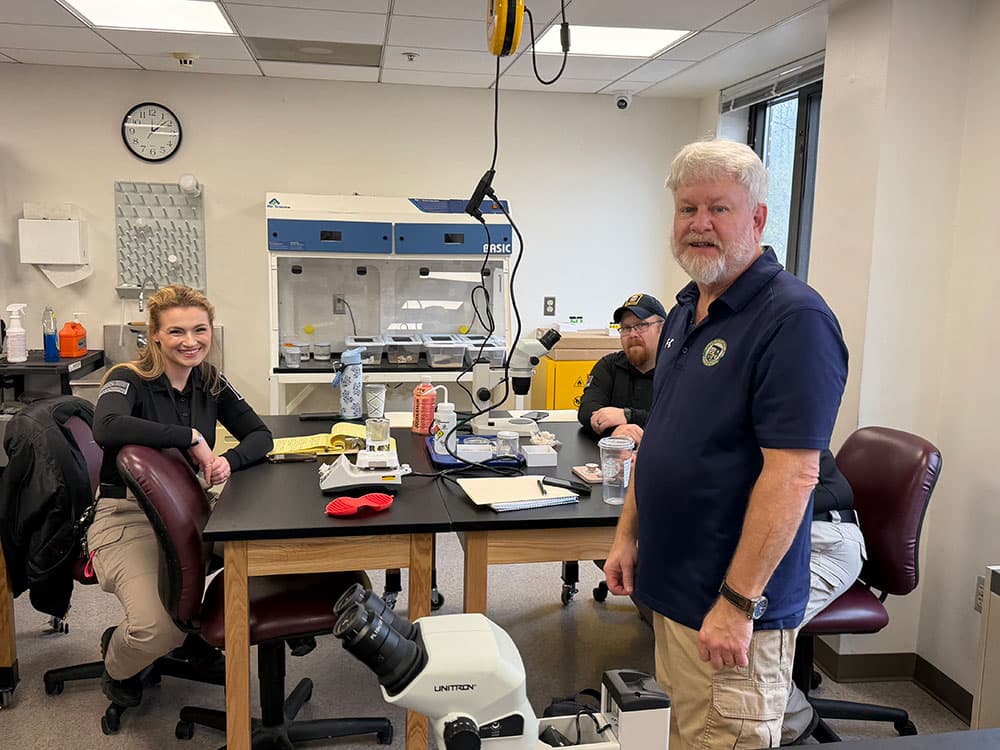
Dr. David Rivers and Dr. Rhys Williams leading forensic evidence training at Loyola University Maryland
Dr. David Rivers leading a forensic evidence training workshop

About the Team

The People Behind the Institute

Core Members

Dr. David Rivers

Professor of Forensic Science

Loyola University Maryland

Dr. Rivers is a forensic entomologist at Loyola University Maryland, where he researches and provides legal expertise in several areas involving necrophagous flies and parasitic wasps. His research laboratory currently investigates the physiological interactions occurring between flies that develop on a corpse.

Presently, Dr. Rivers is examining the physiology of maggot masses, which are large feeding aggregations of fly larvae that form on an animal carcass during decomposition.
Dr. Rhys Williams

Dr. Rhys Williams

Assistant Professor of Forensic Science

Loyola University Maryland

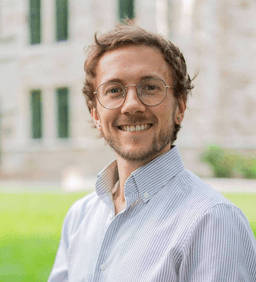
Dr. Williams is a biological anthropologist at Loyola University Maryland, where he specializes in digital imaging and soil analysis within bioarchaeology and forensic anthropology. His research has grown to focus on the digitized analysis of discrete forensic evidence, soil profiling for burial site interpretation, and scholarly public engagement.

Dr. Williams is currently developing new methods for the visualization and identification of animal evidence for rapid scene testing for the Animal Forensics Institute.

Jonathan Fried

Assistant Teaching Professor

Loyola University Maryland

Jonathan Fried is a forensic pattern analyst with more than 20 years of experience in law enforcement, crime scene investigation, and forensic analysis across Connecticut, Nevada, and the District of Columbia. His work focuses on forensic documentation, photography, and evidence collection involving both human and animal injuries, including the use of aerial imaging as an FAA licensed remote pilot.

Jon is actively engaged in training and advancing standardized, technology-driven approaches in support of the Animal Forensics Institute, and offers additional expertise in firearms and toolmarks analysis.

Affiliates

Marion Davidson

Assistant Teaching Professor in Forensic Science

University College London

Marion Davidson is a forensic science researcher and a PhD Candidate at University College London. Marion’s work primarily explores the judgments and decision-making processes of forensic examiners and the development of professional standards and best practice recommendations designed to ensure the reliability of forensic evidence.

Alongside her decision-making research, Marion studies the taphonomic effects of animal scavenging, the determination of human versus non-human remains, and the search and recovery of clandestine graves. She additionally provides expert consultation for post-conviction appeals, specifically addressing issues of potential cognitive bias.

Collaborators

Baltimore City Animal Control

Sharon Colburn, Director

Sharon Colburn is the Director of Animal Control for Baltimore City. Sharon oversees animal services and has been involved in addressing policy changes regarding community cats and animal welfare.

Baltimore City Animal Control logo

Talbot Humane

Patty Crankshaw-Quimby, Executive Director

Patty Crankshaw-Quimby has been with Talbot Humane since 1999. Working her way through the ranks, Patty is committed to ensuring the pets and their people of the Mid Shore have the services and care they need. Patty is also the current president of Professional Animal Workers of Maryland, the state association of animal control and humane societies, a consumer member and vice president of the Maryland Board of Veterinary Examiners, and a member of the Maryland Spay Neuter Advisory Board.

Benefactors & Supporters

Show Your Soft Side

Show Your Soft Side is a public service campaign run entirely by volunteers with the goal of ending animal abuse before it starts and generating support for the world's animal rescue community. Their mission is to create a more compassionate world for animals while providing support for the most vulnerable.

Show Your Soft Side logo

PAWS: Professional Animal Workers Society of Maryland

PAWS is an organization which encourages and assists in the professional development of organizations and individuals engaged in Animal Control, Animal Welfare and sheltering. The goals of PAWS are to provide education, training, legislative information and mutual fellowship for its members.

PAWS: Professional Animal Workers Society of Maryland logo

Loyola University Maryland

The Animal Forensics Institute is hosted and supported by the forensic science department at Loyola University Maryland, Baltimore USA. Loyola is committed to academic excellence, care for the whole person, service, justice, diversity, and integrity. The Animal Forensic Institute supports Loyola's mission to prepare students at both the undergraduate and graduate levels for lives of meaningful professional service and leadership.

Loyola University Maryland logo